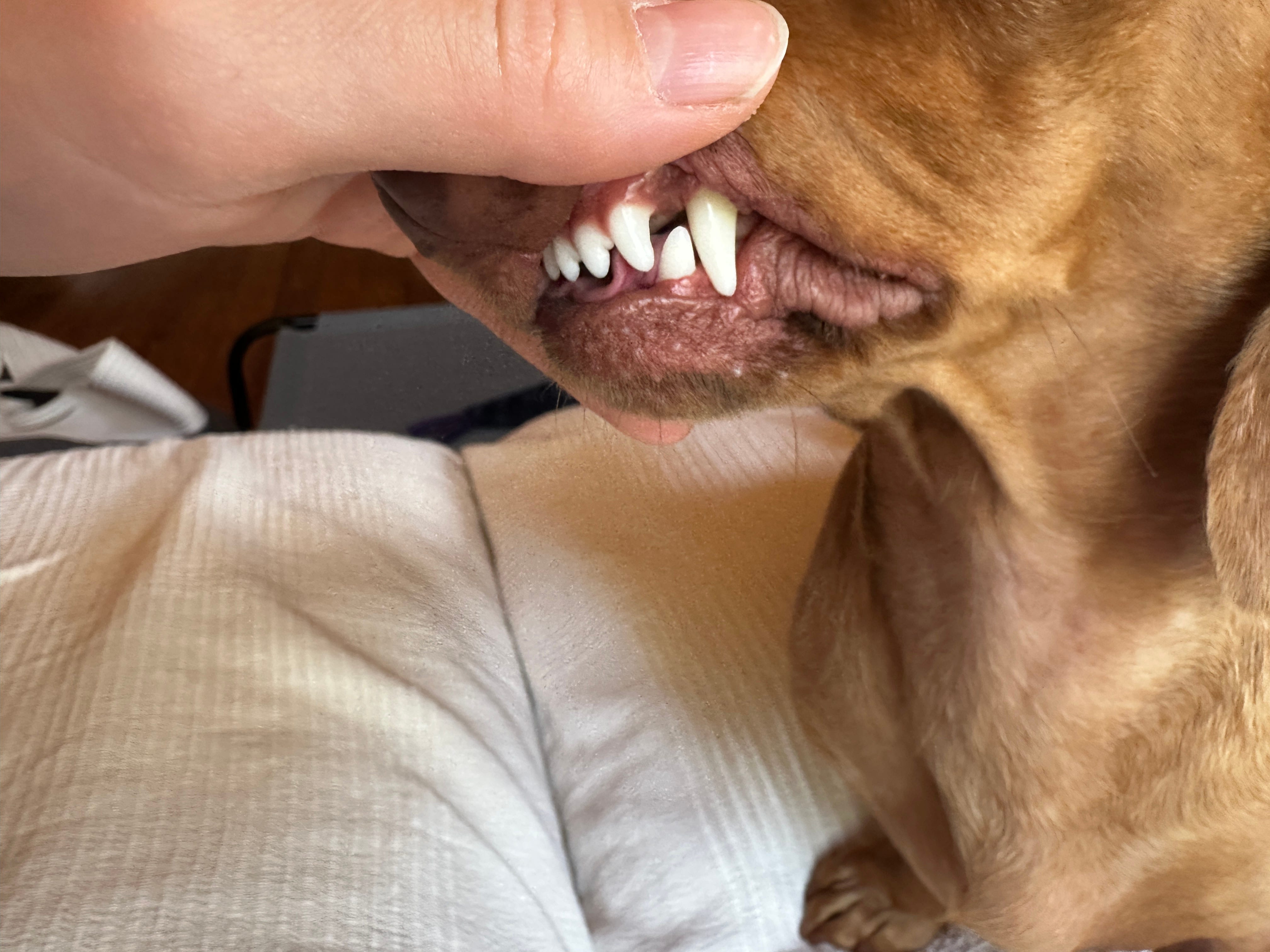
We had to make our own dog toothpaste
Dog dental health is a tough one
Disclaimer: This is our personal routine. This is not advice and we suggest you check with your vet before making changes to your dog’s diet or dental routine.
After a long and difficult month moving house we are…still a mess over here! But we wanted to share something that we think is super important—Doggy oral health. Dachshunds and Chihuahuas are notorious for having bad teeth, but we are doing everything we can to keep Cedric and Edith’s teeth healthy. Here is how their recent dental exams went, how we started brushing their teeth, and our current routine. Before that here are some top recipes that you might have missed:
Brushing your dog’s teeth is hard, but important.
Teeth brushing is one of the more difficult and unpleasant tasks that comes with being a dog owner. Dogs don’t like it, it’s messy, and often smelly, especially if not done regularly. Because it’s such a chore, most pup parents tend to ignore it and hope for the best. Some vets even claim (like one we’ve seen) that kibble cleans teeth. How they got vets to believe this is anyone’s guess. If it were true, people could simply eat crackers and clean their teeth, too. We all know that this doesn’t work, but for our pets, we often suspend disbelief.
According to the AVMA, approximately 80% of dogs have periodontal disease by age three. That means that your dog probably has inflamed gums, teeth and bone loss in their mouths. Bacteria are everywhere and the ones that live in your dogs mouth turn left over food into acid that causes damage. Over time the protective exterior on teeth, called enamel can break down and get eaten away by the acid and bacteria. So too can the bone that holds the teeth.
Real food doesn’t mean you don’t have to brush
Unfortunately, just like for people, we have to brush our teeth no matter what foods we eat. Even a whole food diet doesn’t eliminate the risk of periodontal disease in dogs — especially in small breeds. From funky genetics, to their tiny mouths holding too many teeth and being extremely hard to brush, small dogs are at a disadvantage. All dogs have the same number of teeth, so in smaller dogs they get even more crowded. On top of that, many toy breeds retain their baby teeth (aka deciduous teeth) instead of shedding them like they are supposed to. These baby teeth rot more easily and often infect neighboring teeth. Unaligned bites, or malocclusions, are the norm in small dogs.
On top of that, smaller breeds tend to live longer than larger dogs, so over time, their likelihood of developing severe periodontal disease is far higher due to the accumulation of damage.
We started the process too late
We started brushing Cedric and Edith’s teeth regularly a bit later than we should have. Cedric was around two, and Edith around one year old when they started getting regular brushing. Even though that’s still considered young, it’s already enough time for tartar to accumulate. Plus, not regularly looking in their mouths leaves time for issues to go unnoticed and get worse (like Edith’s retained baby teeth). If we could do it again, we would start brushing on day one. It took time for the dogs to get used to the routine and maybe even more so for us to become proficient at doggy tooth brushing. That’s a skill that isn’t taught or talked about enough!
Now Cedric and Edith get their teeth brushed daily, and we rarely skip. With time and practice, Cedric has become very cooperative. He allows us to brush his teeth thoroughly and even to floss the gap in his front teeth where food gets stuck. We’ve also become good at opening his mouth and getting in all the nooks and crannies. Edith is much less cooperative. Brushing her teeth is still an extreme sport despite our training efforts. We have worked out a combination of wiping and brushing that works best for her. Though she makes it difficult to be thorough, we stay consistent and adapt our methods to best suit her. It has to be done!
We realized we have to do more than clean
Both dogs recently had their first dental cleanings (under anesthesia), and while tartar was minimal, they still had to have extractions. Edith had baby teeth that never fell out and needed removal. She also had two front lower teeth that were crowded together, difficult to keep clean, and had become wiggly. Radiographs revealed Cedric had hidden bone loss on one tooth that appeared in perfect condition from the outside.
It was disheartening to to see the dogs have to go through painful extractions. So now we are doubling down on their oral care routine by incorporating a new element: remineralization. Remineralization is a major focus in human dental care, but dog toothpastes tend to focus primarily on controlling plaque and tartar. While that’s great, clean teeth can still wear down over time. Dogs can’t have fluoride (the most common remineralizing ingredient in human toothpaste), so what other options are there?
What is nano-hydroxyapatite?
You may have heard of nano-hydroxyapatite by now, as it’s become a popular alternative to fluoride. More and more human toothpastes are using it, and the body of research supporting its use in human oral care continues to grow. Fortunately, it’s generally considered safe for dogs. However, the research on its use in dogs is still very limited.
Hydroxyapatite is the main substance in teeth and bones. It’s a mix of calcium, phosphate and a hydroxyl group, which gives it the name. “Nano” just means that it’s ground into extremely fine particles (Nanoparticles are measured in nanometers, which are 1/1,000,000 of a millimeter!).
Our current routine
There aren’t many toothpastes available for dogs that include nano-hydroxyapatite, and the ones we did find don’t have everything we want in them. So, we started making our own doggy toothpaste with ingredients to both control bacterial build up and hopefully help remineralize to keep their teeth strong.
This is what our nightly routine looks like:
We brush Cedric and Edith’s teeth with our homemade toothpaste and children’s toothbrushes.
We use unflavored floss on Cedric’s gap and a cloth to wipe Edith’s front teeth.
We do a final brush with bee propolis extract (a dog safe one!) for it’s anti-bacterial and anti-inflammatory properties.
We wash their toothbrushes with soap and warm water and leave them out to dry.
We also provide them collagen chew sticks a couple times a week, for extra mechanical stimulation.
Here’s the toothpaste recipe we use:
Again, this is not advice and we suggest you check with your vet before attempting to use any new ingredients on your dog. Always take proper precautions before working with nano particles as they can irritate lungs and cause harm if inhaled.
That’s it for this week.
All the best,
Joelle and R.A.


